
CITY GUIDEPARIS
A city shaped by elegance and indifference
Words by Isha Mehmood.
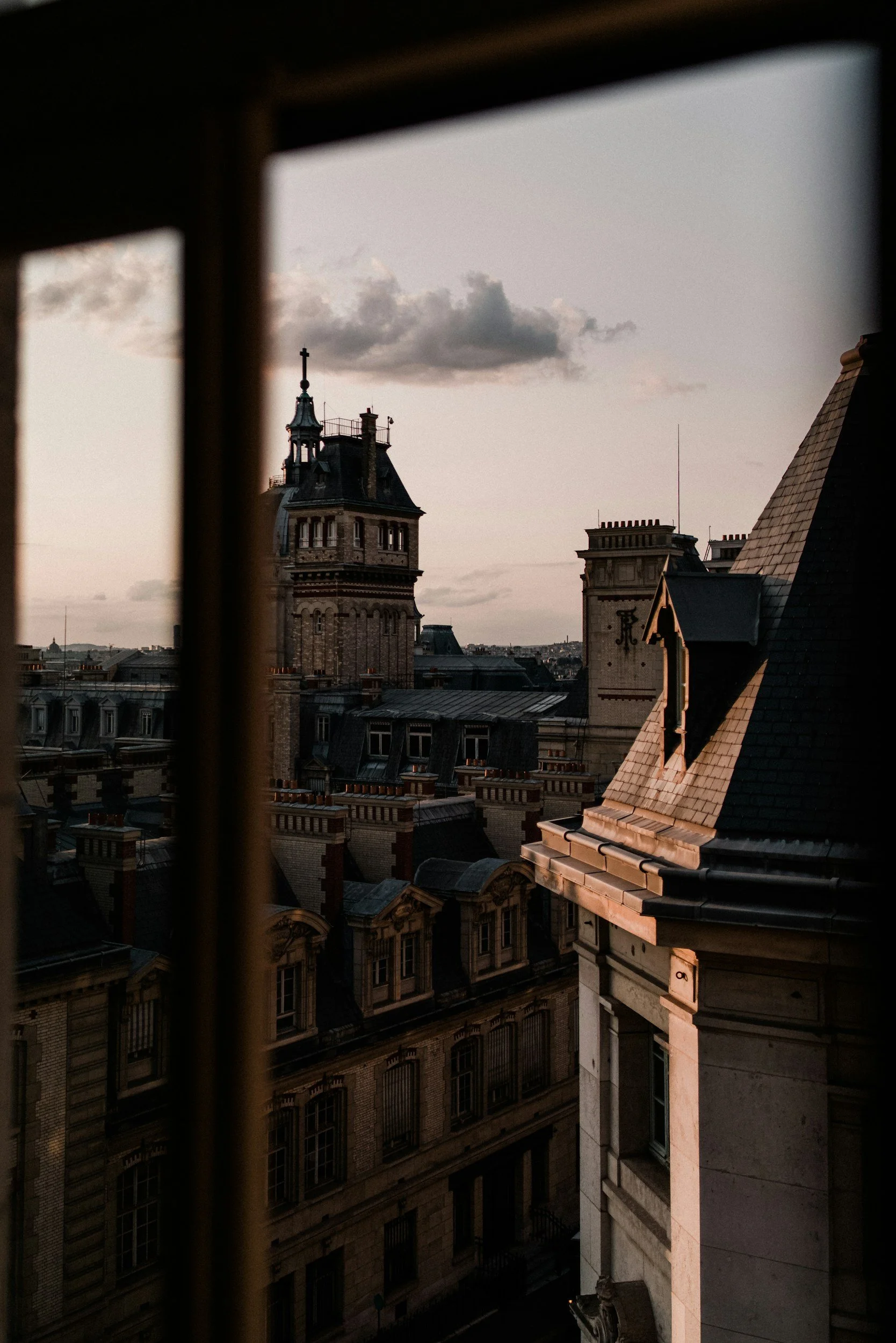
Paris at dusk: a rooftop view of classic architecture and soft evening skies.
To love Paris is to accept a certain level of indifference in return.
I mean that in every sense: nasal, unbothered, philosophically committed to refusal. It is a city unafraid to show its emotions; so assured of its beauty, it feels no need to be kind.
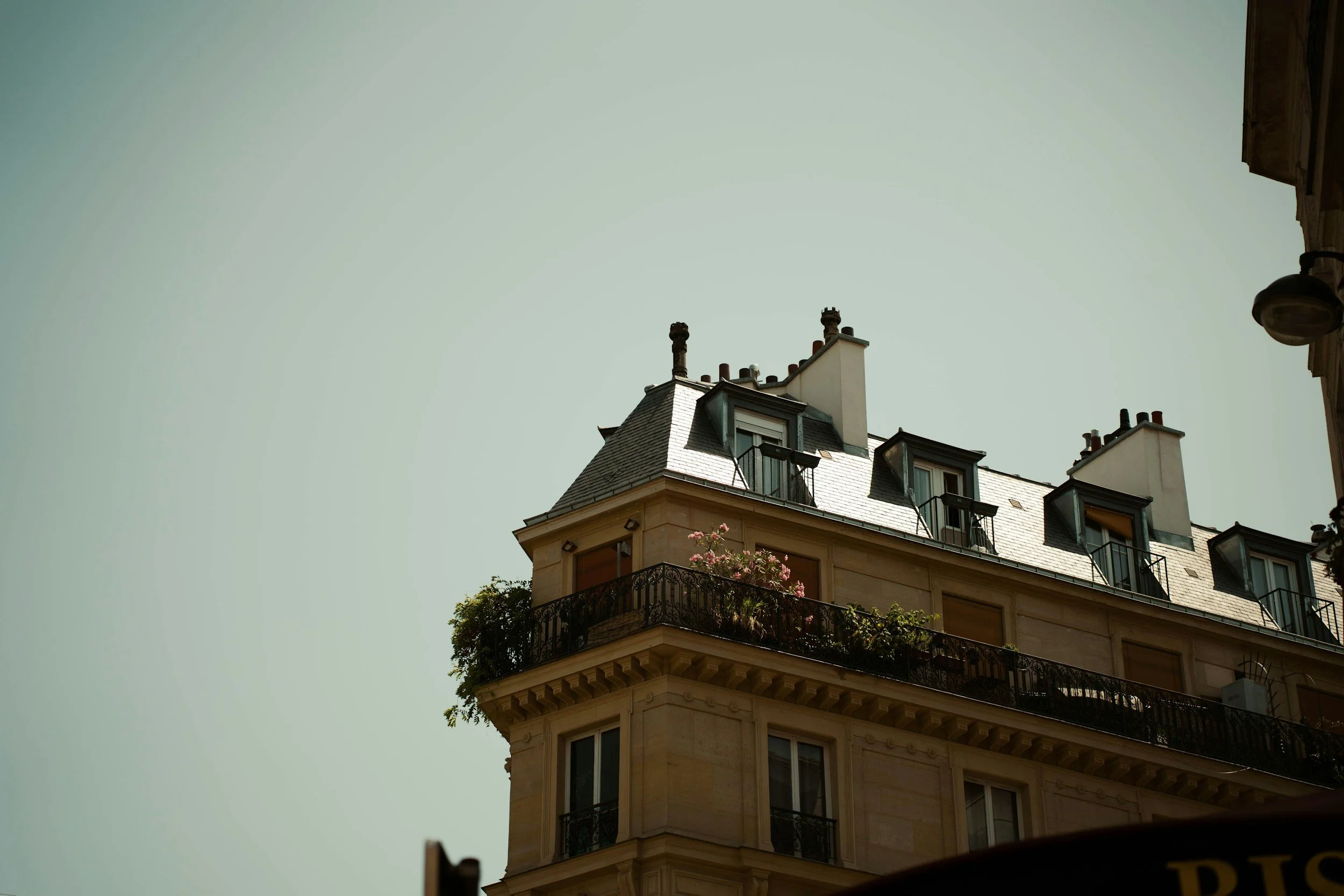
The elegance goes without saying. Wrought iron balconies bloom with red geraniums; a baguette spills from a bicycle basket; a picnic by the Canal or apéro en terrasse, regardless of the season. It sounds cliché, but it’s true. The city is so enchanting it slows time. Or maybe that’s just the French: a culture that treats leisure not as indulgence, but as a principle. Meals are never rushed, and nothing is overextended unless absolutely necessary—and even then, reluctantly.
There’s a particular charm to this stubbornness. A waiter will flatly say non if you ask for coffee with, instead of after, dessert. A taxi driver will refuse your fare if it’s not on his way home, and then shrug as if to say, Mais enfin, what did you expect?
These are people who plan a mass defecation in the Seine to protest Olympic spending, who shut down the city over the thought of retiring at 64 instead of 62, who celebrate a Champions League win by setting their own streets on fire—not from rage, but ecstasy. Rousseau said authority stems from the consent of the governed. Parisians will remind you society only functions because they agree to play along.
I’ve been to Paris so many times it’s become a sort of second home. I first visited as a tourist, then moved there as a law student, and later returned, as a woman in love. I came to see a man I’d met in France, then another who returned to it, and later, accompanied by one born there. Eventually, I returned with the Frenchman I’d met in New York and would go on to marry (in Paris). It’s a city (and demographic) I kept insisting I was done with and somehow found myself becoming more and more bound to with time.
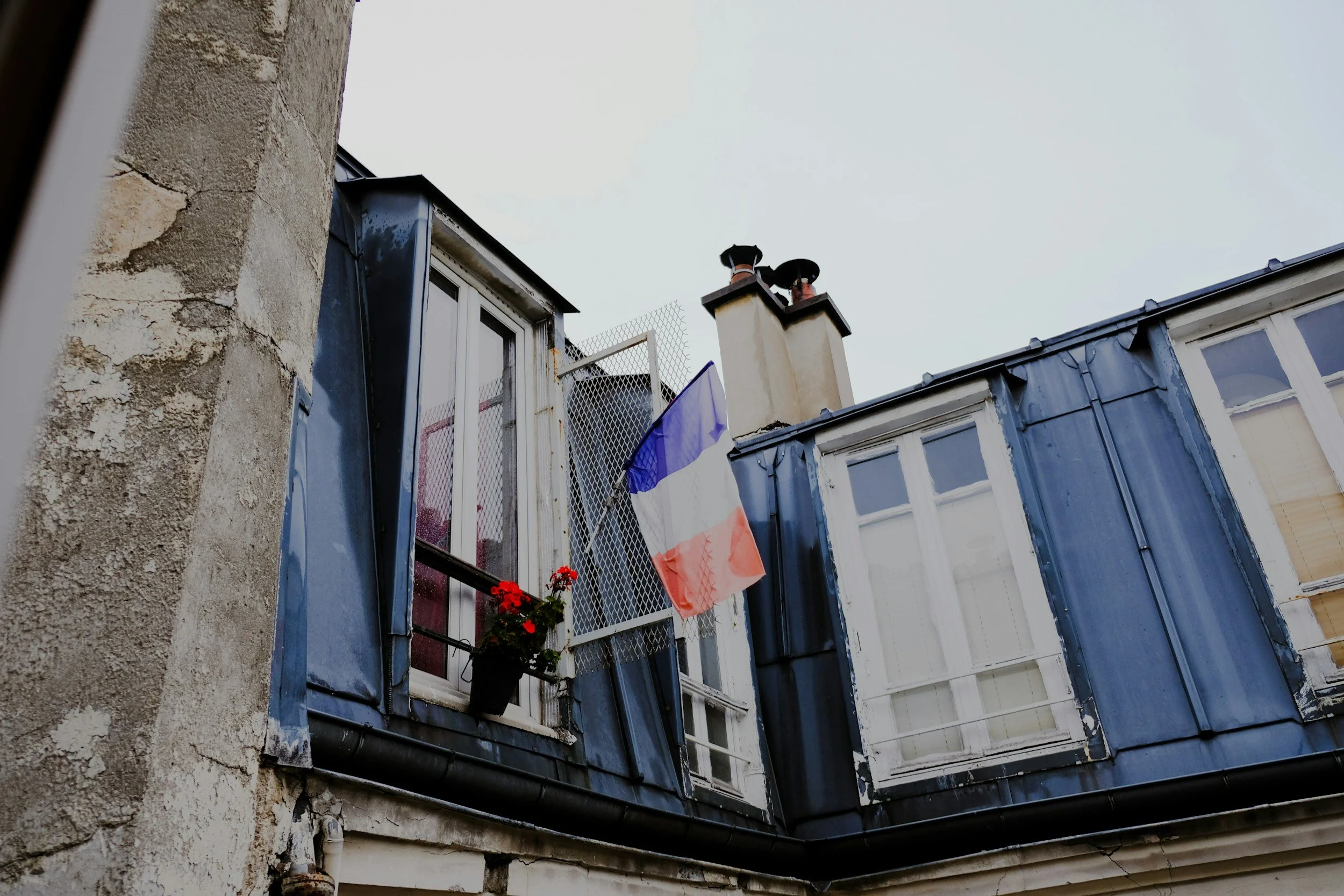
Classic Paris alley: French flags fluttering over stone walls and lively blue stalls.
My favorite part of Paris—or France, for that matter—is not historically French at all. As a Muslim woman of mixed heritage, I am drawn to complexity: the kinds of stories that can’t be pulled apart cleanly, that exist only because of their entangled, multilayered past. At its peak, France colonized approximately 84 countries, second only to the British Empire (13 of those remain as overseas departments and territories). Modern France exists because of this colonial legacy—culturally, economically, gastronomically.
And yet.
And yet, the country’s most vocal political movement is a far-right party that campaigns on anti-Muslim, anti-immigrant rhetoric. It overlooks—or willfully denies—the immeasurable contributions of postcolonial communities to its culture. This tension isn’t unique to France, of course, but here, it feels especially personal.
For those who choose to see it, immigrant Paris is everywhere. Tunisian grocers in the 18th arrondissement. Senegalese street vendors near the Eiffel Tower. Vietnamese temples in the 13th. Kurdish kebabs in Saint-Germain. Cameroonian hairdressers near Château d’Eau. Syrian bakeries on side streets. The list goes on.
In the run-up to the Olympics, some Parisians questioned whether Aya Nakamura—born in Mali, raised in the Parisian banlieues, the most-streamed Francophone artist in the world—was the right choice for the opening ceremony. She embodies contemporary Paris, which is precisely why, for some, she represents a challenge to French identity and language. The debate raised an urgent question: What does it mean to be French today? And whose Paris is it, anyway, if not for those who grew up on its streets and persevered despite its rejection?
My husband grew up in the same department as Nakamura—the quatre-vingt-treize (93). In French media, it's often reduced to a breeding ground for poverty, crime, and radical Islam. But having been there many times, I can tell you: it's simply a borough. One of bakeries and barbershops, of children playing, of parents practicing the art of flânerie, aimlessly wandering in streetwear or traditional clothes.
If I may recommend a film before visiting Paris, it’s Les Misérables. Not the Victor Hugo story, but Ladj Ly’s 2019 film that won the Cannes Jury Prize. Set in the modern-day banlieues, it offers a glimpse of another Paris: one that is fully French, but complicated by far more than its reputation suggests.
These recommendations focus on central Paris, but they aim to reflect a broader, richer truth: a city layered with history, diversity, and complexity. So enjoy it, as you wish. Or better yet, like a Parisian: on your own terms.
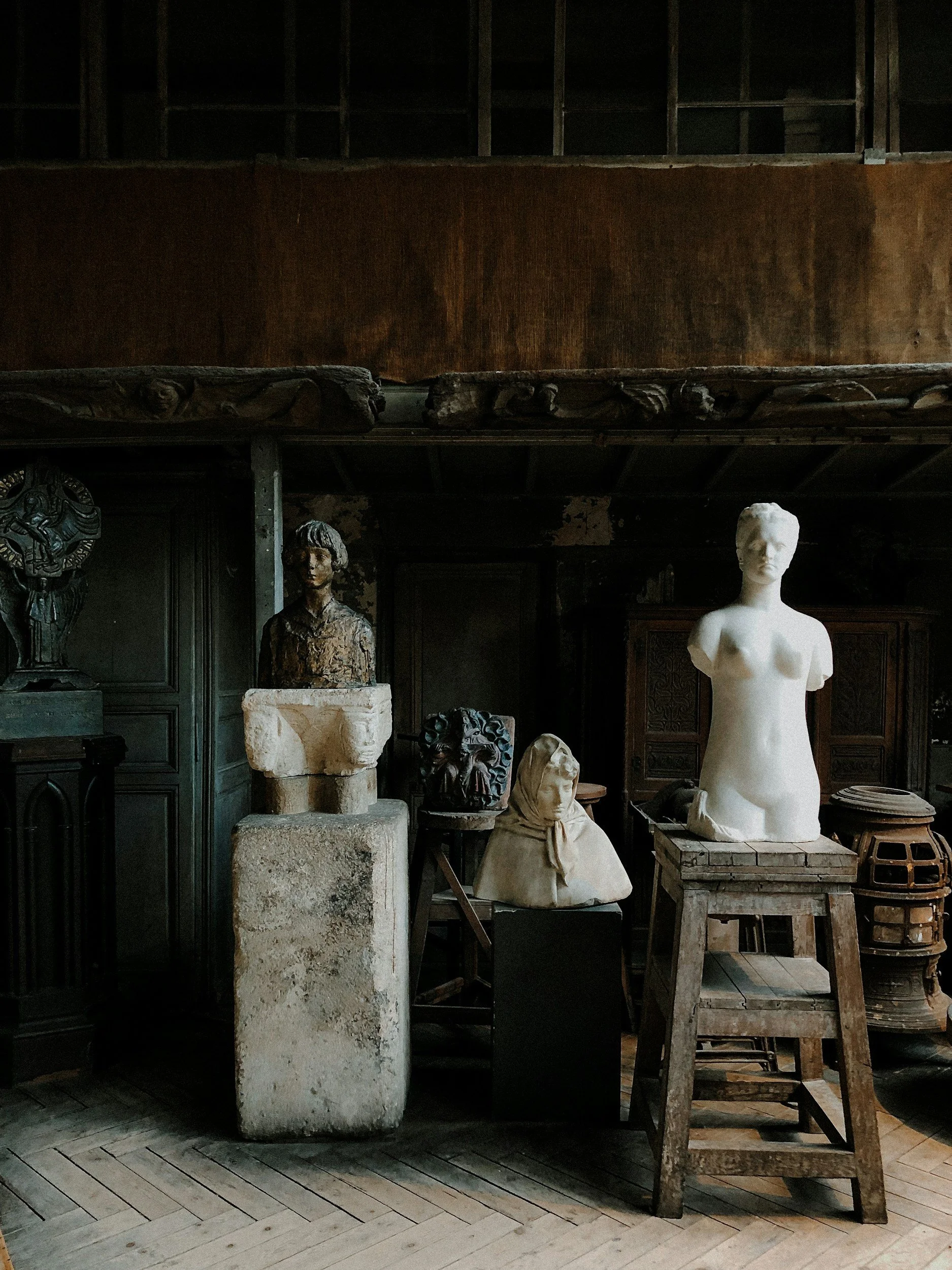
Plaster torsos and busts in a dim, timeworn atelier.
Before You Go:
Paris isn’t designed around children and it doesn’t try to be. Its rhythm favors adult convenience: long lunches, narrow staircases, unsentimental sidewalks. But with flexibility, it can still be surprisingly fun with young children.
Service is never rushed. Waitstaff are salaried, not tip-reliant, so you’ll rarely be hurried (or fussed over).
Sidewalks are slim and uneven. Bring a carrier for the métro and museums (elevators are rare and strollers often restricted). A compact stroller handles cobblestones and café corners best.
Restaurant hours don’t always align with family schedules. Many places close between lunch and dinner. We’ve highlighted spots with continuous service or earlier seating.
Outdoor smoking is common, especially on terraces. A new national ban covers beaches, parks, and school zones, but cafés remain exempt so choose tables accordingly.
For a day trip, Giverny offers stroller-friendly paths through Monet’s gardens.
A handful of new play cafés offer rare freedom: coffee for you, space to roam for them.
And lastly: don’t fear a little non. Parisians are direct but unbothered. Warmth isn’t guaranteed, but when it comes, it feels earned.
OUR GUIDE
-
Mini itineraries that link nearby highlights into easy, walkable routes.
Seine Riverside (1st–7th Arr.): Pedestrian-only paths lined with cafés, floating gardens, and playgrounds. Start at Pont Neuf, stroll the Quais de Seine, relax at Les Berges de la Seine, and end at Fluctuart, an urban art hub with rooftop views.
Le Marais (3rd & 4th Arr.): Cobblestone streets, cozy courtyards, and a mix of art, shopping, and food. Begin with Maison Aleph’s pastries or Glace Bachir’s Lebanese ice cream, browse Musée Carnavalet and Place des Vosges, shop at Merci, Moulin Roty, or Le Petit Souk, and end with Breizh Café crêpes or tea and sablés at Bontemps La Pâtisserie.
Jardin du Luxembourg & Saint-Germain (6th Arr.): Classic Paris, softened by a multicultural rhythm. Wander Jardin du Luxembourg, grab a croissant at La Maison d’Isabelle, explore the Institut du Monde Arabe, and end at the Grande Mosquée de Paris or +82 Paris for Korean-inspired desserts.
Montmartre (18th Arr.): Steep hills and artistic charm—best explored with a baby carrier. Start at Sacré-Cœur for city views, then wander Parc Marcel Bleustein Blanchet and Place du Tertre. End with brunch at Atelier P1, P1 Bouche, or Breizh Café, or sweet treats at À la Mère de Famille.
La Villette & Canal de l’Ourcq (19th Arr.): Lively hub for art and family fun. Visit Cité des Sciences et de l’Industrie (with dedicated a baby exhibit), then explore La Villette Park, Philharmonie de Paris, Parc des Buttes-Chaumont, and stroll along the Canal de l’Ourcq.
-
193 Gallery (3rd Arr.): Contemporary art from the Global South.
Perrotin (3rd Arr.): Renowned contemporary gallery with a strong Asian program.
Musée Carnavalet (3rd Arr.): Museum of Paris history with immersive exhibits and a peaceful garden.
Institut du Monde Arabe (5th Arr.): Mashrabiya-inspired façade, exhibitions, and panoramic views.
Musée du Quai Branly (7th Arr.): Indigenous art from Africa, Asia, Oceania, and the Americas; free stroller rentals available.
Fluctuart (7th Arr.): Floating urban art center on the Seine.
Petit Palais (8th Arr.): Free museum with a peaceful garden café.
Grand Palais (8th Arr.): Reopened Beaux-Arts landmark hosting major art, fashion, and photography shows.
AFIKARIS Gallery (11th Arr.): Art from Africa and the diaspora.
Atelier des Lumières (11th Arr.): Immersive digital art in a repurposed foundry; baby carriers only.
Palais de Tokyo (16th Arr.): Vast contemporary art center with experimental exhibitions and installations.
Cité des Sciences et de l'Industrie (19th Arr.): Family-friendly science center with a dedicated baby space.
-
Tuileries Gardens (1st Arr.): Italian Renaissance gardens with fountains and statues.
Place des Vosges (3rd & 4th Arr.): Historic square, perfect for picnics.
Jardin des Plantes (5th Arr.): Expansive botanical gardens with museums and greenhouses.
Jardin du Luxembourg (6th Arr.): Quintessential Paris park with puppet shows and boat ponds.
Les Berges de la Seine (7th Arr.): Floating gardens, riverside seating, and play spaces.
Parc Montsouris (14th Arr.): Spacious, stroller-friendly park with ponds, lawns, and playgrounds.
Parc Marcel Bleustein Blanchet (18th Arr.): A hidden square tucked behind Sacré-Cœur.
La Villette Park (19th Arr.): Contemporary park with art, music, and family events.
Parc des Buttes-Chaumont (19th Arr.): Dramatic cliffs, bridges, and grottos.
Canal de l’Ourcq (19th Arr.): Scenic waterside path for long, lazy walks.
-
Indoor Play Spaces & Cafés
Tribu (3rd Arr.): Design-forward concept store with creative workshops and a calm play space.
Petit Forêt (8th Arr.): Play café serving fresh pastries and hosting engaging workshops.
Entre Deux Siestes (9th Arr.): Gentle, light-filled boutique-playroom with nursing space and French-made baby goods.
Bambin (10th Arr.): Minimalist play café with curated toys, soft play structures, and coffee for parents.
Otipi (11th Arr.): Scandinavian-inspired play café with Montessori corners and specialty coffee.
April Café (11th Arr.): Stylish neighborhood café with a kids’ corner, seasonal menu, and relaxed weekend brunch.
Maison Fika (15th Arr.): Nordic-inspired café and boutique offering fika, baby-friendly seating, and quiet playtime.
Les Polinsons (15th Arr.): Spacious play café and concept store with creative workshops and a bohemian aesthetic.
Playdate (16th & 17th Arrs.): Indoor play space for children under five.
Ernestine Café (20th Arr.): Artsy café with a garden, family workshops, and a welcoming, local feel.
Parent & Baby Classes
Bébé Music Box (7th Arr.): Global music classes for babies, taught in English.
Casa Yoga (10th Arr.): “Maman et Bébé” yoga classes.
Maison-Né (12th Arr.): Multidisciplinary center with workshops for babies and parents from sensory play to massage.
Community & Cultural Spaces
Space 12 (11th Arr.): Community hub with open-play sessions, movement workshops, and family-friendly cultural events.
Ludothèque de Paris (Various Arrs.): Neighborhood toy libraries offering free play, sensory activities, and storytime.
-
Glace Bachir (3rd Arr.): Lebanese-style ice cream rolled in pistachios.
Bontemps La Pâtisserie (3rd Arr.): Elegant tea salon known for sablés.
Petite Île Boulangerie (3rd Arr.): Taiwanese-French fusion pastries.
Fragments (3rd Arr.): Minimalist café with top-tier coffee, homemade pastries, and a welcoming vibe.
Maison Aleph (4th Arr.): Middle Eastern-inspired desserts.
+82 Paris (5th Arr.): Korean patisserie with bingsu and delicate cakes.
Café du Clown (6th Arr.): Laid-back café with quality beans.
Tribu Coffee Récréatif (9th Arr.): Breastfeeding-friendly café designed for parents.
Mamiche (9th & 10th Arr.): Beloved for inventive breads and pastries.
Boulangerie Utopie (10th Arr.): Known for sesame éclairs and creative bakes.
Atelier P1 (18th Arr.): Organic bakery with bread-making workshops.
Du Pain et des Idées (10th Arr.): Famous for escargot pastries and mini-pavés.
% Arabica Oberkampf (11th Arr.): Sleek Japanese café with stroller space.
Brigat’ (11th Arr.): Classic French pastries with a modern twist.
Café Kitsuné (Various): Minimalist café known for matcha and Japanese-inspired sweets.
Une Glace à Paris (Various): Celebrated for inventive, creamy ice-creams.
Yann Couvreur (Various): Acclaimed pâtisserie known for playful flavors, stroller space, and quick service.
-
Chosen for continuous service or early seatings, high chairs, or just being kind to families.
Café Charlot (3rd Arr.): Classic Parisian bistro with all-day service and welcoming outdoor seating.
Breizh Café (3rd & 6th Arr.): Breton crêpes in a warm setting.
Les Copains du Faubourg (8th Arr.): Rustic French bistro with all-day dining.
Pink Mamma (9th Arr.): Vibrant Italian restaurant with early dinners.
Maythai (11th Arr.): Contemporary Thai with high chairs and early seatings.
Jardin 21 (11th Arr.): Summer only — garden restaurant in Parc de la Villette.
Clamato (11th Arr.): Lively seafood spot with walk-in service, seasonal small plates, and afternoon hours.
P1 Bouche (18th Arr.): Contemporary brunch spot.
Hardware Société (18th Arr.): Australian-French brunch café with inventive dishes and stroller-friendly seating.
Des Terres (20th Arr.): Inventive, seasonal neighborhood bistro.
-
Concept & Design Stores
Merci (3rd Arr.): Chic concept store with a kids’ section.
Moulin Roty (3rd Arr.): Whimsical toys and children’s goods.
Le Petit Souk (6th Arr.): Playful concept store for kids.
Memory Kids (10th Arr.): Concept store and showroom for kids.
Centre Commercial Kids (10th Arr.): Sustainable concept store featuring ethically made children’s fashion, toys, and accessories.
Caramel et Cie (10th Arr.): Paris-designed backpacks and school accessories in bold, playful colors.
Smallable (11th Arr.): Large concept store for kids’ fashion and décor.
French Classics
Atelier Pascaline Delcourt / Les Petits Bla-Bla (6th Arr.): Bespoke children’s fashion and accessories.
Bonpoint at Le Bon Marché (7th Arr.): Luxury children’s wear.
Bonpoint Vintage (16th Arr.): Pre-loved pieces from the iconic French label.
Petit Bateau (Various): Classic French staples for babies and toddlers.
Jacadi (Various): Elegant, timeless children’s wear.
EDITOR’S PICKS
Morning: Cardamom bun & play at Maison Fika.
Afternoon: Place des Vosges.
For a rainy day: Storytime at Ludothèque de Paris or a stroll through Petit Palais.
For design inspiration: Merci and Centre Commercial Kids.
For a family meal: Breizh Café in the Marais.
STORIES FOR THE ROAD
This book link is an affiliate link.
For kids:
The Little Prince by Antoine de Saint‑Exupéry: A poetic and gently philosophical tale of a little prince and his journey across planets. (Ages 6+; illustrated picture book 3+). English edition. Illustrated picture book.
Le Petit Nicolas (Nicholas) by René Goscinny & Jean-Jacques Sempé: A collection of whimsical adventures and misadventures of French childhood. (Ages 9+). English edition.
For parents:
Les Misérables (2019), directed by Ladj Ly: A gripping, contemporary portrait of Paris’s banlieues that examines justice, youth, and community in modern France. Watch on Prime Video.
CHOUETTE MAP
Take Chouette with you -- download our map for easy exploring.