
The First Flight
What to know, bring, and expect on your first trip with a baby
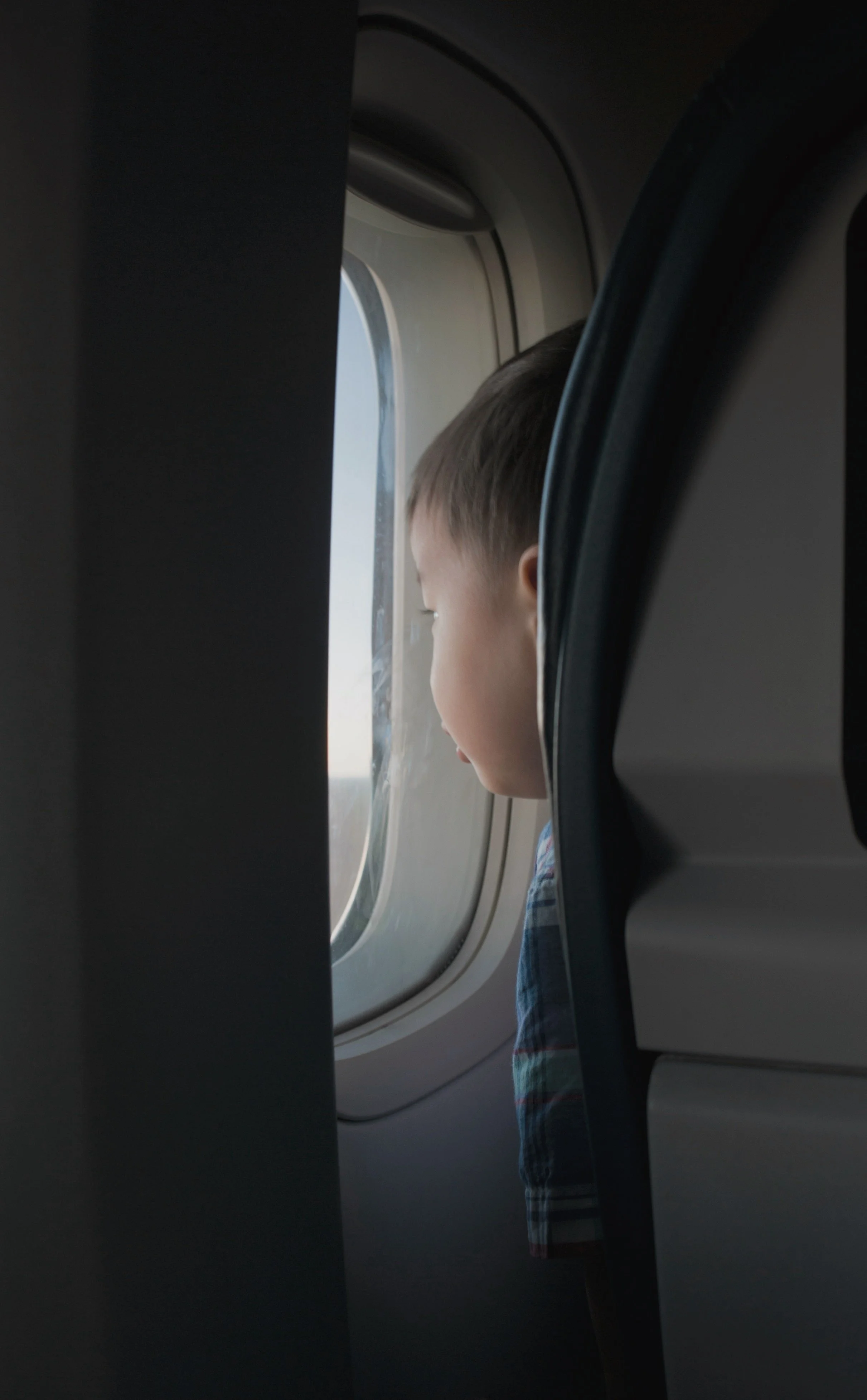
The first flight with a baby can intimidate even the most seasoned traveler. Routines that once ran on autopilot require rethinking from scratch: how such a small person requires so much gear, how to get breast milk through security, whether to check or gate-check the stroller, how to manage pumping in transit. First-time parents have been known to book the adult tickets and only realize at the airport that the baby needed one too. None of it is hard, exactly. It just has to be thought through before you get to the gate.
This guide covers what to book, what to pack, and what to know before you get there. It is written for the first year, when every flight is organized around feeding, sleeping, and being held, and when the hardest part is often that you don't yet know what you don't know.
Download the packing list and pre-flight checklist. →
Before You Book
Baby tickets and costs
Infants under two need a ticket even when traveling on a parent's lap. On U.S. domestic flights that ticket is typically free; international flights generally charge around ten percent of the adult fare, applied to the ticket price regardless of how you booked. This means an international ticket purchased with miles still generates a cash infant fee; on premium cabins, that can run into the hundreds.
On long-haul routes, some families book a separate seat for the baby, particularly on overnight flights or as the child gets bigger. It is not required for children under two, but if you want one, call the airline directly; booking platforms default to lap infant for that age group and won't offer the option online. You will need an FAA-approved car seat, and the child must stay in it for takeoff and landing. On codeshare flights, policies can differ between carriers; confirm with both.
Airline policies
Most airlines allow one baby item, a stroller, car seat, or travel crib, to be checked free of charge. Some will accommodate more than one if you ask, but policies vary and it is not guaranteed; confirm before you get to the counter.
Bassinets are aircraft-dependent, and service agents don't always have accurate information about what a specific plane carries. If you need one, call to reserve it, reconfirm at check-in, and ask again at the gate. Even with a confirmed reservation, assignments can change so board prepared to hold your baby.
TSA rules for milk, formula, and baby food are more permissive than standard liquid limits, but agents don't always know this; a screenshot on your phone can save time at security.
Documents and paperwork
Passports are required for international travel, including newborns. If you and your baby have different surnames, carry a copy of the birth certificate; some countries require it to establish parental authority. Check visa requirements well in advance.
Health and medical preparation
Make sure vaccinations are current for your destination, and save the details of a nearby clinic or hospital before you arrive. Pack a small health kit: thermometer, fever reducer, saline drops, any prescriptions you may need. Hopefully none of this gets used but it can be helpful for peace of mind.
Accommodation
When booking, confirm that they provide an infant crib; do not assume that one will be available. Do not assume a bathtub. For younger babies who cannot sit upright, a sink works, or pack a small inflatable tub as a backup.
Choosing Seats
Bassinets and bulkheads
Bassinet seats are in bulkhead rows; not all aircraft have them in premium cabins, so if you are booking business or first class specifically for the bassinet, confirm the aircraft configuration before you pay. Reserve as early as possible and reconfirm at check-in and again at the gate. Check weight and height limits even if your baby fits the age range.
Car seats
If your child has a separate seat, an FAA-approved car seat is required. Most standard infant and convertible seats qualify; the approval label must be visible to the crew. The Ride Safer travel vest is also FAA-approved and significantly easier to carry, but international carriers are sometimes unfamiliar with it and may question whether it qualifies; having the documentation on hand helps.
Packing With Precision
Diaper bag essentials
Pack diapers, wipes, a portable changing pad, and a bag for soiled clothes. A pre-packed zip bag with just a few diapers and wipes lets you stow the main bag overhead and keep only what you need at your seat. Disposable changing liners are useful for messier changes. Pack a spare outfit for the baby and a change of shirt for yourself; blowouts and spit-ups are common in the air.
Feeding and pumping
Breast milk and formula are exempt from standard liquid limits but will be inspected; keep them accessible and easy to show. Ice packs and water for mixing formula are also permitted. Pre-portioning formula before you leave saves time; some products are designed specifically for travel, and we link to one we like in our gear recommendations. Pack extra milk in case you’re delayed. If you are breastfeeding or pumping, know that travel and disrupted sleep can affect supply so build in more flexibility than you think you need. A small amount of formula can be useful backup regardless.
Stroller
An overhead-bin stroller is worth it if you travel frequently. Gate-checked and hold-checked strollers can be damaged in transit and won't be available until you land. An overhead stroller stays with you all the way to the gate. Some larger strollers come with protective bags and damage warranties, but they tend to be expensive and the problem doesn't fully go away.
Sleep and comfort
Bring a carrier for hands-free movement through the airport and a lightweight blanket that can double as a play mat or nursing cover.
Parent essentials
A fanny pack or small crossbody keeps passports, phone, and valuables accessible without adding to what you're carrying. Always pack a few gallon-size zip bags: useful for soiled clothes, pump parts, dirty pacifiers, or anything else that needs to be contained mid-flight.
At The Airport
Check-in
Give yourself more time than you think you need. If you are checking a large stroller or car seat, it usually goes to the oversized baggage desk, separate from main check-in.
Security
You will be asked to remove your baby from a carrier for screening. Keep milk, formula, and expressed breast milk together in a separate bag and easy to show. If traveling with a partner, the person carrying the milk or formula should also be with the baby; TSA agents sometimes push back when the two are separated.
When traveling with a partner, one person stays with the baby while the other manages the trays and bags. It sounds obvious until you are at the conveyor belt.
TSA PreCheck and Global Entry can speed things up, but both require applying in advance and the programs have been in flux; check current status before counting on either.
In the terminal
Many airports outside the U.S. offer family or priority lines but they may not always be well marked. Nursing spaces and family rooms vary widely by airport; consider looking up in advance if you need them.
In The Air
Boarding and takeoff
Wearing your baby in a carrier while boarding keeps your hands free. Nursing, bottle-feeding, or offering a pacifier during takeoff and landing can help with ear pressure. Some airlines require lap infants to use an infant loop belt during ascent and descent; the crew will provide it.
Feeding
Flight attendants can usually warm bottles but it may take time. Keep anything you might need within reach, especially food you can manage with one hand.
Sleep and small comforts
Younger infants often fall asleep to the steady hum of the plane. Older babies do well with a few small toys or books that feel familiar.
Diaper changes
Ask where the changing tables are as soon as you board; they are not always where you expect. Keep a pre-packed zip bag with just the essentials at your seat so you don’t have to bring a full diaper bag into a small space.
Bathroom breaks
If you are traveling alone, flight attendants are often happy to hold your baby while you use the restroom. It is normal to ask.
At Your Destination
Settling in
Many families choose to rent bulky items, cribs, strollers, and car seats, rather than carry them. Services like BabyQuip operate in many U.S. and some international cities.
Car seats in transit
Even if your baby is traveling as a lap infant, you may need a car seat at your destination. Most parents check the car seat in a padded travel bag. You can pack soft items inside to use the space, but airlines occasionally push back if the contents seem unrelated to the car seat; diapers and clothes read as reasonable padding and rarely cause problems. Stroller adaptors that clip the seat onto a travel stroller make airport transit easier.
Layovers and delays
Some airports offer family lounges, stroller loans, or quiet spaces for feeding and rest. During delays, ask what is available.
Health and safety
Keep a small health kit in your carry-on and note local emergency numbers or hospitals before you arrive.
Finally
Some airlines acknowledge a baby's first flight. Air France, Air Astana, and Emirates have been known to offer a small certificate, a gift, or a Polaroid of your family on board. Mention it to the crew when you board. Some pilots, if asked, will also send out a pair of wings.
Consider purchasing a postcard from every destination you visit. They will be old enough to read them sooner than you think.
