
Children's Books Are a Child's First Passport
by Natasha Khan Kazi
On childhood, belonging, and the early geography of stories.
Picture books capture a slice of life, a moment from someone's memory woven into words and art to share a universal truth. But growing up, that someone rarely looked like me: a South Asian Muslim immigrant. As a library kid, I devoured stories, not realizing that with every new character I met — Anne, Laura, Margaret — I was learning how to belong in my new home, and slowly drifting from the one I'd left behind.
For so long, the shelves told only part of the story. Stories of adventure and friendship often came with one kind of face, one kind of family. Publishing decided who got to be universal and who was "niche." For many of us, that meant growing up fluent in the nuance of white characters but never seeing our own lives reflected back. Media scholars George Gerbner and Larry Gross once called this symbolic annihilation: the erasure of entire communities from the stories a culture tells about itself. When children never see themselves or families like theirs in books, it quietly teaches them they are less real, less worthy of being remembered.

Photo: Kaysha WeinerSo when I read the first draft of Bela and Lily to my then 7- and 8-year-old sons, it felt healing. Their childhood and mine finally crossed paths. In that moment, I wasn't just reading them a story; I was handing them a passport. Within those pages, they saw familiar food, language, and skin tones celebrated, not explained. The comfort of a shared meal, the rhythm of a mother tongue, the beauty of brown skin under sunlight, all carried them somewhere deeply familiar. Watching my sons devour my story, I felt joy and also something I didn't expect: the space between hope and determination. Through teary eyes and a tight chest, I wondered what seeing their stories meant to them.
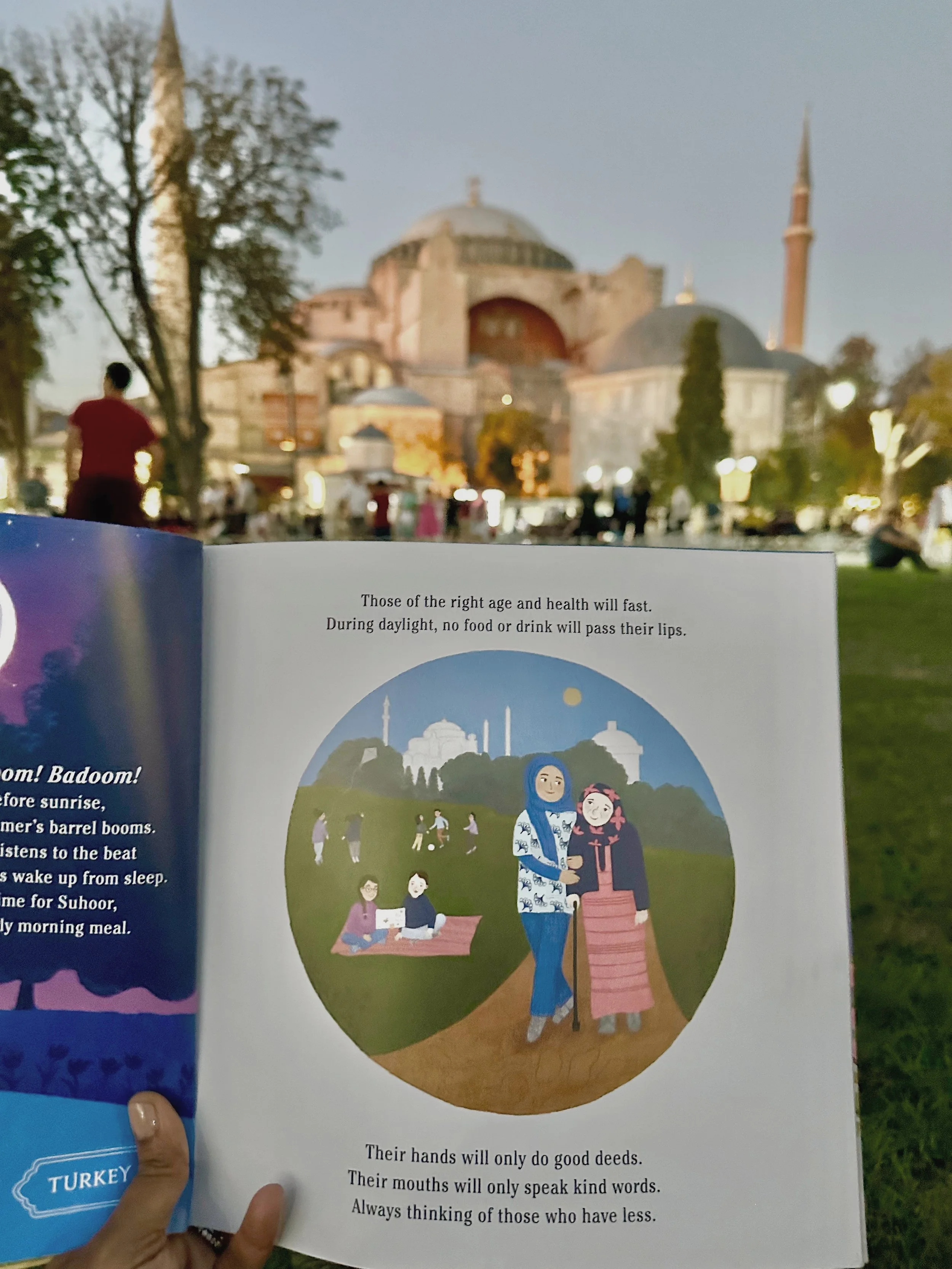
Photo: Natasha Khan KaziWhen a child recognizes their world inside a story, it tells them their life is worth printing. For so long, those stories were left out of the American narrative. In my work, representation isn't just visibility; it's history-keeping —a way of saying we were here, too. Mira Nair, acclaimed filmmaker and producer of NYC Mayor Zohran Mamdani once said, “If we don’t tell our own stories, no one else will.”
As a mother, I've learned that we don't need to go far to raise globally minded, empathetic children; sometimes all it takes is a bookshelf to soften hearts and open minds. Diverse picture books benefit all children. They can dispel stereotypes and offer a more balanced view of the world.
Every day, my sons pass the copies of Bela and Lily, Lulu In The Spotlight, and Moon's Ramadan on our bookshelf. Sometimes, I wonder which story, which universal truth will be their compass. That could be what every book really is: a small passport passed from one generation to the next, stamped with hope.
Natasha Khan Kazi lives in Southern California, where she writes and illustrates books for young readers, including her debut picture book, Moon’s Ramadan (a 2023 JLG Gold Standard Selection and SLJ Best Picture Book). Her recent works include Lulu In the Spotlight (Versify/HarperCollins) and Bela And Lily (Kokila/Penguin).
Learn more about Natasha and her books at www.natashakhankazi.com and follow her adventures @natashakhankazi.